Cyprus · insulation
Insulation in Cyprus.Compare several quotes at once.
Insulation in a Cypriot home is bought for the bedroom that is unusable in August and the room nobody sits in during January. Deciding which surfaces to treat, and doing it while they are open for other reasons, is most of what separates money well spent from money spent twice.
- Costs with their source shown
- Permit rules cited
- Written for Cypriot building stock
Insulation companies in Cyprus
- #2PromotedWaterproofed Cyprus
Waterproofing, roofing and damp work across Cyprus, with the membrane system named in the quote.
Start with the room that is unusable
Most homeowners come to this subject through a specific complaint rather than through a general wish to reduce bills. A top-floor bedroom that cannot be slept in without air conditioning running all night. A west-facing living room that is uninhabitable from four in the afternoon. A north room that stays cold through January in a country where nobody expects to be cold.
That complaint is a better starting point than an audit, because it tells you which surface is doing the damage.
A room too hot in summer is usually being heated from above or through glazing. A room cold in winter is usually losing heat through a poorly protected wall or through gaps. A room with mould in a corner is a condensation problem in which insulation is half the answer and ventilation the other half.
Work from the symptom to the surface, and you will spend on the surfaces that matter to you rather than on a specification designed for a different climate.
The roof comes first
On a Cypriot house, the roof receives more solar radiation for longer than any other element. A flat concrete roof absorbs it through the day and releases it downward into the evening, which is why a top-floor room is often hottest after the sun has gone.
Insulating that path is the single most effective intervention available in most houses, and there are two places to do it.
At ceiling level, under the slab, using boards or a suspended ceiling with insulation above. This is the cheaper route and it is available from inside without touching the roof. It protects the room; the slab itself still heats up.
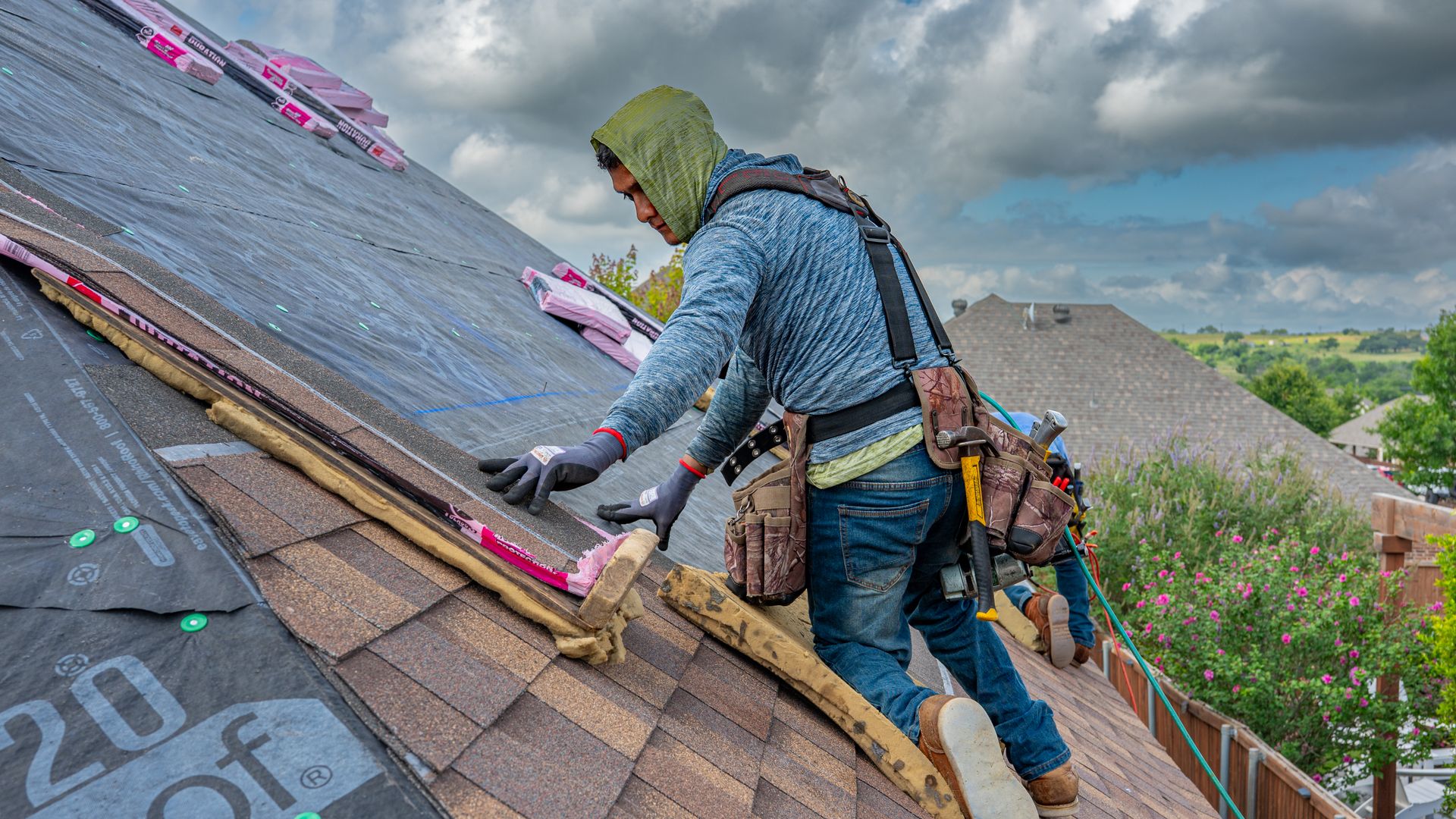
At roof level, above the slab and under the waterproofing. This is the better answer because it stops the structure heating in the first place, and it is the obvious choice if the roof is being re-waterproofed anyway. If the roof is not being touched, it means opening it, which changes the economics entirely.
A reflective finish on the roof surface reduces how much heat is absorbed before any insulation gets involved. It is inexpensive relative to the alternatives and works with insulation rather than instead of it.
Walls: the choice that costs you a room
Wall insulation on a Cypriot house comes down to which side you put it on, and the two answers are genuinely different products.
External insulation goes on the outside face and wraps the whole structure, including the concrete columns and beams. That is its main advantage: it deals with the cold bridges rather than working around them. It also leaves your rooms the size they are, and it protects the structure from temperature swing. It costs more, it needs scaffold, and it changes the appearance of the building — which in an apartment block makes it a decision for the owners collectively rather than for you.
Internal insulation goes on the inside face and is within your control in a flat. It is cheaper, it can be done room by room, and it takes floor area — typically enough to matter in a small bedroom, and enough to affect where a wardrobe fits.
Internal also asks a question external does not: where does moisture end up. Putting insulation on the warm side changes where the dew point sits within the construction, and a detail that gets that wrong produces condensation inside the wall rather than on it, where you cannot see it until it does damage. This is a detail to have specified rather than assumed, and it is the main reason internal insulation should not be a DIY decision.
Cold bridges, and why marks trace the frame
Cypriot construction is a concrete frame with block infill, and concrete conducts heat far better than the blocks around it.
The consequence is visible in a great many flats: a darker line or a mould mark running vertically where a column sits, or horizontally under a beam. Those lines are the coldest surfaces in the room in winter and among the warmest in summer, and they are where condensation forms first.
Insulating the wall while leaving the frame uncovered leaves the bridge in place and can make it more obvious, because the surrounding wall is now warmer and the contrast is greater. External insulation covers everything and avoids this. Internal insulation has to be detailed to run past the frame, which means returning the insulation into reveals and around beams rather than stopping at them.
If somebody proposes insulating your walls internally and has not mentioned what happens at the columns, that is the question to ask.
Floors, and the one case worth considering
Floor insulation is a smaller question in most Cypriot homes, because a slab on ground stays reasonably stable in temperature and is rarely the source of a complaint.
The case where it matters is a room over an unheated space — over a garage, an undercroft, or an open parking area beneath an apartment. That floor is an external surface in everything but name, and a room above one behaves like a room with an extra external wall.
If a floor is being lifted anyway, insulating it is inexpensive at that moment. If it is not, the disruption rarely justifies it except in the case above.
Do it while the surface is open
This is the sequencing point that decides whether insulation is a good purchase or a poor one.
Insulation itself is not expensive. Getting to the surface is. A ceiling being taken down for rewiring, a wall being stripped back for replastering, a roof being re-waterproofed, a floor coming up for new services — in each case the expensive part has already been paid for by the other work, and adding insulation costs the material and a modest amount of labour.
Doing the same work later, as its own project, means paying for the access, the making good and the redecoration a second time. That difference is frequently larger than the cost of the insulation.
So the practical rule for a renovation is to decide the insulation at the same time as the scope of everything else. Walk through the plan surface by surface, and for each one that will be open, ask whether it should be insulated while it is. That conversation costs nothing at planning stage and is unavailable afterwards.
Insulation and ventilation are one decision
A better-insulated home is a home that leaks less air, and moisture your household produces has to leave somewhere.
If you insulate and seal without providing a way for that moisture to go, you have not removed a condensation problem — you have moved it, usually to the next coldest surface. Cypriot homes with modern windows are frequently already at that point before any insulation is added.
Extraction that vents outside from the bathroom and kitchen, and a deliberate means of background ventilation, belong in the same specification as the insulation. They are cheap, they are the part most often left out, and leaving them out is how a comfort improvement becomes a mould complaint.
Shade before insulation, where you can have both
If a room is overheating because sun falls directly on its glass, insulating the walls around that glass addresses the smaller half of the problem.
Radiation stopped outside the window never enters the room. Radiation that has come through is already inside, and insulation in the walls does nothing about it — the air conditioning does. That is why a shutter, an awning, a pergola or a deep reveal frequently changes how a Cypriot room feels more than any amount of insulation in the wall beside it.
Traditional Cypriot houses had this built in: deep reveals, small openings on the hot elevations, shutters that closed through the afternoon. A lot of newer housing removed those features in favour of glass and then added air conditioning to cope, which is why the retrofit conversation so often comes back to putting shade back.
The practical order for an overheating room is therefore: shade the glass, insulate the roof above it, and treat the walls last. That order is the opposite of the one most quotes arrive in.
Living with the work
Insulation work is disruptive in a way that is worth planning around rather than discovering.
Internal wall insulation means the room is emptied, the skirting comes off, sockets and switches move forward, and radiators or units come off the wall and go back. Curtain tracks and anything fixed to that wall are removed and refitted. Doors into the room may need easing where the reveal thickens.
Ceiling work is dirtier and affects the whole floor below it, and it usually means lighting is disconnected for the duration.
Roof work depends on weather, and a roof opened in a Cypriot winter needs the forecast watched rather than assumed.
None of this is a reason to avoid the work. It is a reason to sequence it with the rest of the renovation rather than to add it afterwards, when the room has already been decorated and the furniture is back.
What to settle before anybody starts
Which specific rooms are the problem, and in which season.
Which surfaces will be open anyway during the works.
For walls, internal or external — and if internal, what happens at the columns and beams, in writing.
What ventilation provision is included alongside.
Whether the roof is being touched for other reasons, because that decides whether roof-level or ceiling-level insulation is the sensible answer.
Answer those five and the specification writes itself. Skip them and you will be choosing between quotes that are solving different problems.
Common questions
- Which surface should be insulated first?
- The roof, in almost every Cypriot house. It receives more sun for longer than any other part of the building, and on a top-floor room it is the surface doing most to make the room uncomfortable. If you insulate one thing, insulate the ceiling under the roof.
- Does insulation help in summer or only in winter?
- Both, and in Cyprus the summer benefit is usually the one you notice. Insulation slows heat moving in either direction. In a Cypriot August it is slowing heat coming in, which lowers what your air conditioning has to remove and keeps a room usable for more of the day.
- External or internal wall insulation?
- External performs better and costs more, because it wraps the structure and deals with the concrete frame as well as the infill. Internal is cheaper and takes floor area from the room, which in a small Cypriot bedroom is a real loss. Internal also needs care about where moisture ends up, which is a detail worth getting designed rather than assumed.
- What is a cold bridge and why does it matter here?
- It is a path where heat moves through the structure more easily than through the material around it — typically the concrete columns and beams running through a block wall. On a Cypriot building they cause marks that trace the frame, because those lines are the coldest surfaces in winter and the warmest in summer. Insulating the wall while leaving the frame exposed leaves the problem where it started.
- Will insulating stop my condensation problem?
- It can, by raising the surface temperature so moisture stops forming there — but only alongside ventilation. Insulating a room without improving how moist air leaves it can move the condensation somewhere else rather than remove it. The two are one decision.
- When is it worth doing?
- While the surface is open for another reason. A ceiling being replaced, a roof being repaired, a wall being replastered, a floor being lifted — each is the moment when insulation costs the material and a little labour rather than the whole job of opening the surface again.
01Before the first quote
Planning insulationin the right order.
Most renovation overruns are sequence problems, not price problems. Four decisions to make before anyone quotes.
Write down what is being removed
Strip-out defines the job. The surprises live behind tiles and under floors, so say what goes before asking what it costs.
Scope first
Fix the sequence
Trades have an order — first fix before plaster, plaster before paint. A quote that ignores the order hides a second visit.
Order matters
Check what needs permission
Structural changes, drainage moves and most exterior work need permits, and the waiting time belongs in the plan.
Permits
Hold back the last payment
Stage payments tied to completed work keep everyone honest, and the final stage is your snagging leverage.
Stages

Need insulation?One form. Up to five quotes.
Describe the project and we will gather quotes from companies that can handle the whole sequence.